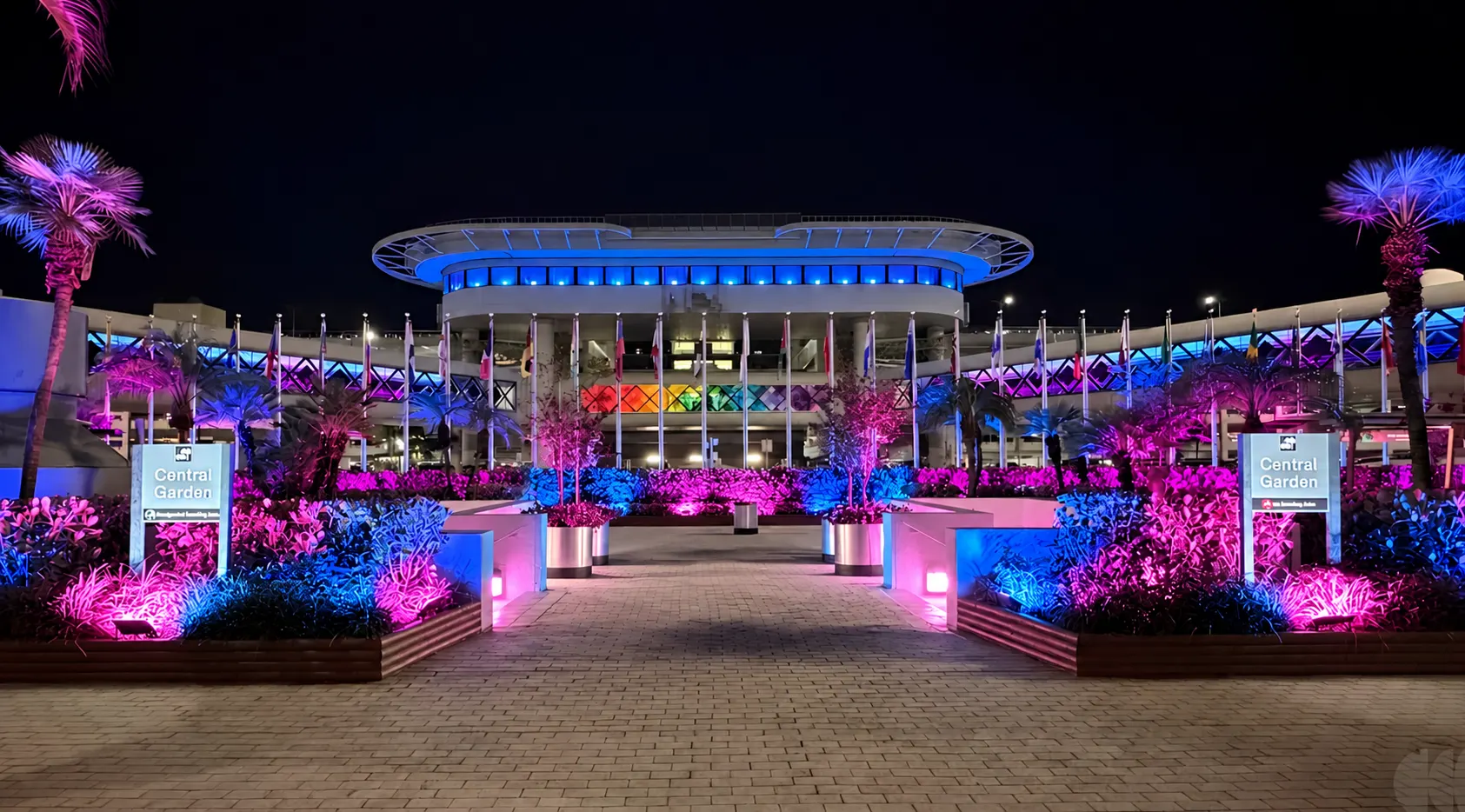




Miami-Dade County has put a number on its part of the Grand Theft Auto VI launch. In a press release on the evening of October 28, Mayor Daniella Levine Cava announced a marketing and advertising package with Rockstar Games valued at $3.9 million. It covers planned themed lighting at Miami International Airport (MIA) and PortMiami, displays on airport walkways, wraps on traffic signal cabinets and paid ads at the airport and on county transit. It also folds in the $975,000 “Welcome to Vice City” sign on the Kaseya Center roof.
What the package covers
The release describes an agreement between the county and Rockstar, plus advertising Rockstar bought from the two media companies that manage ad space at MIA and on the county’s transit system, which includes Metrobus, Metrorail and Metromover. The planned pieces:
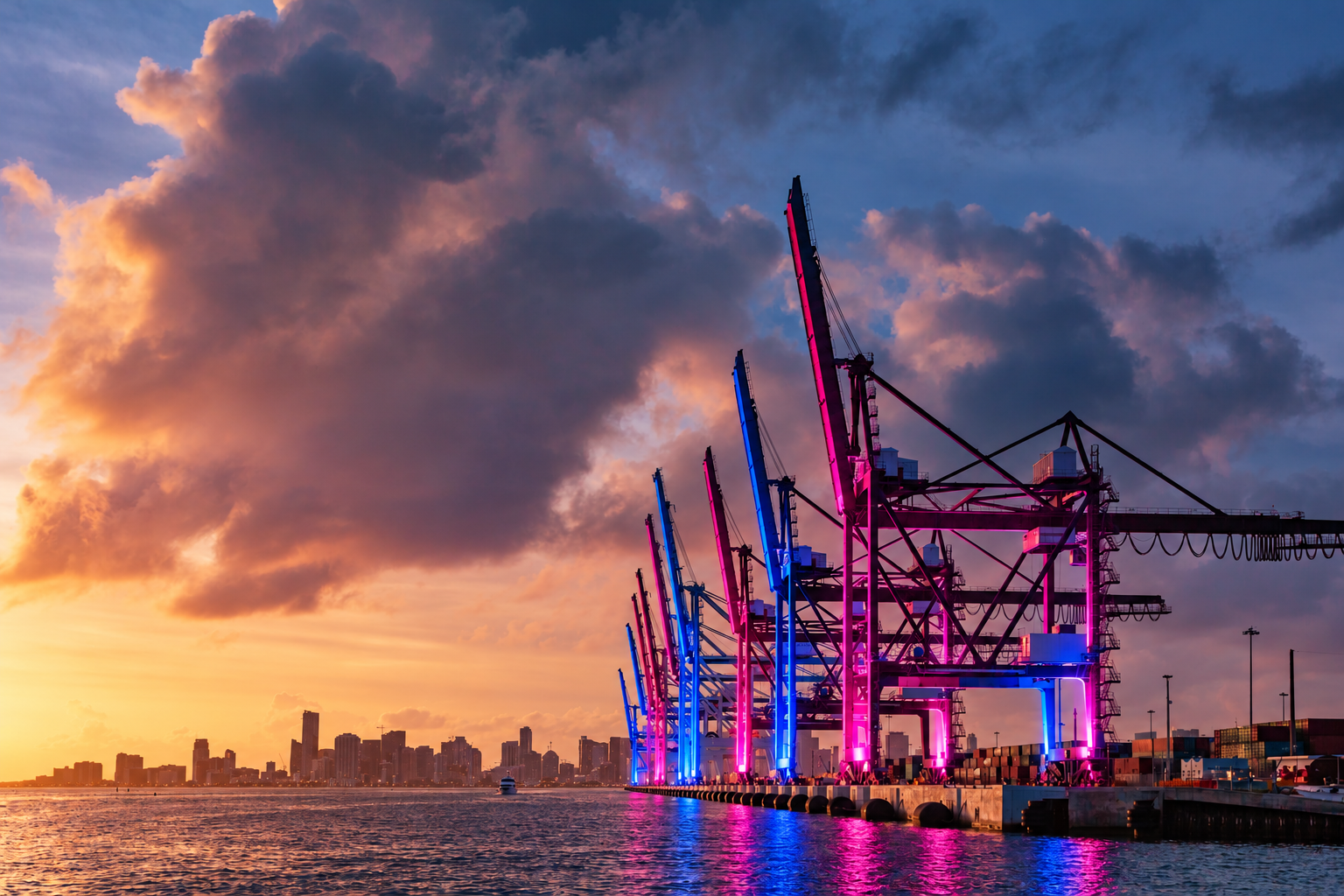
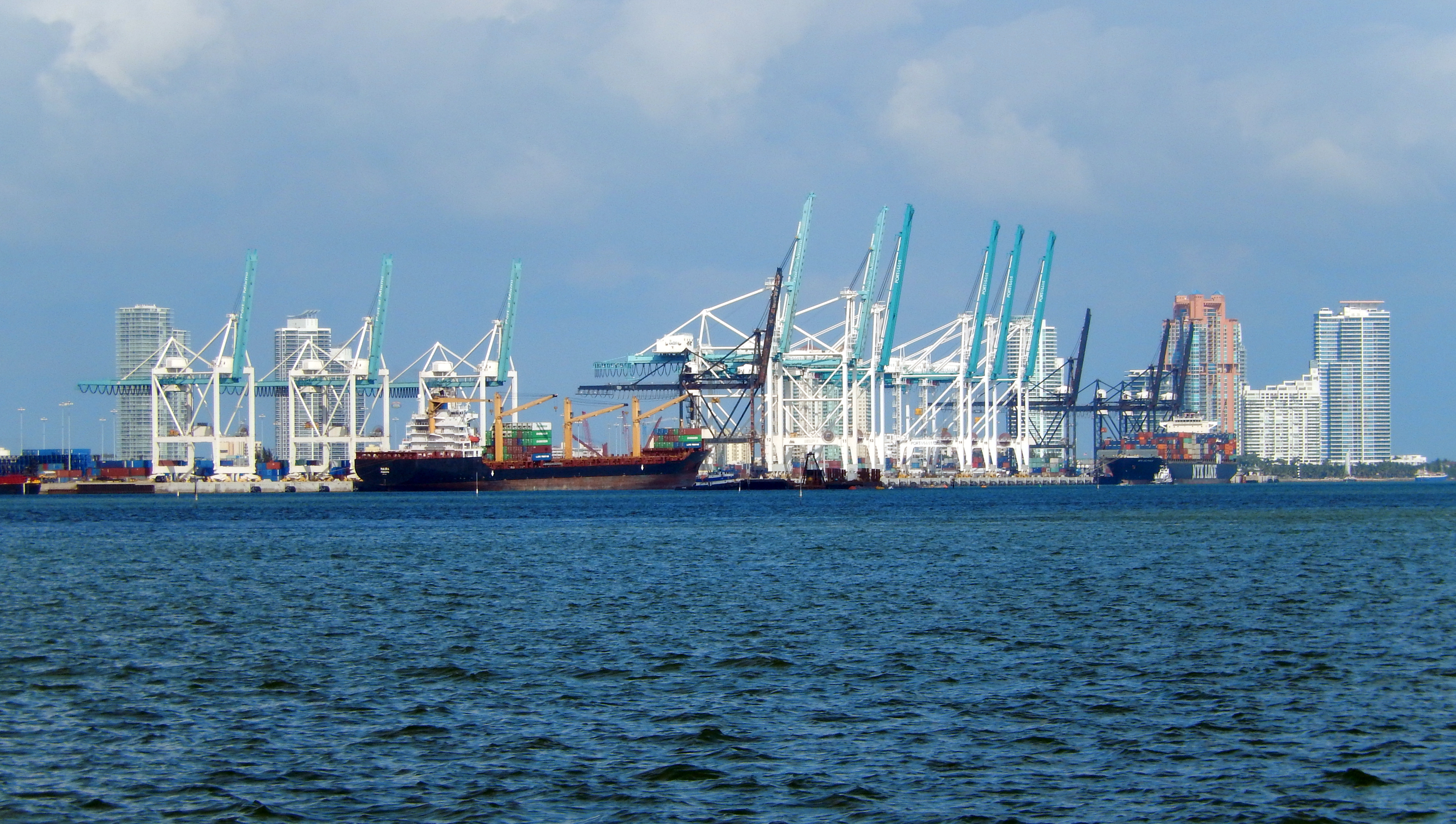
- Themed lighting at MIA and PortMiami. The Miami Herald reported that the airport lights will go in the Central Garden courtyard outside Terminal E, and that the port’s cargo cranes will be lit in GTA VI colors.
- Promotional displays on the pedestrian walkways between the airport’s parking garages and its terminals.
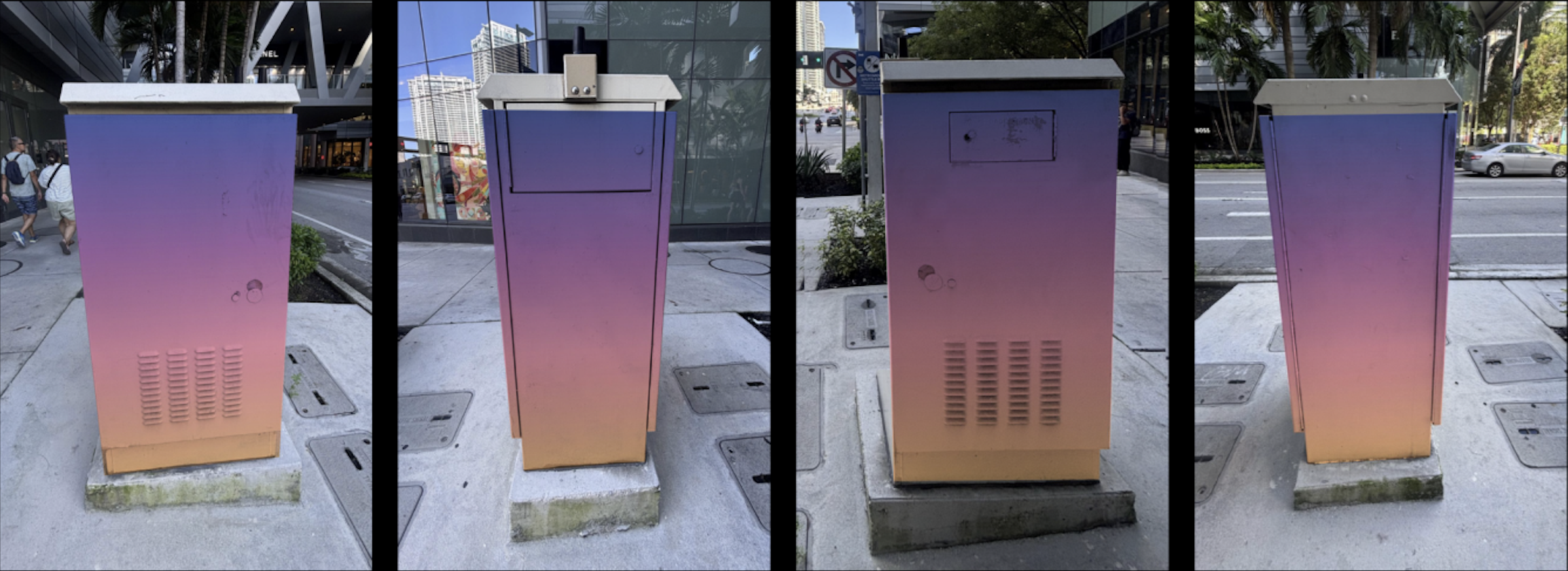
- Decorative wraps on selected traffic signal cabinets around the county.
- The Kaseya Center sign, an earlier $975,000 arrangement, now counted in the total.
The release does not say how the rest of the $3.9 million splits between the county’s own agreement and the media purchases, or which companies sold the ads.
Renderings, not installations yet
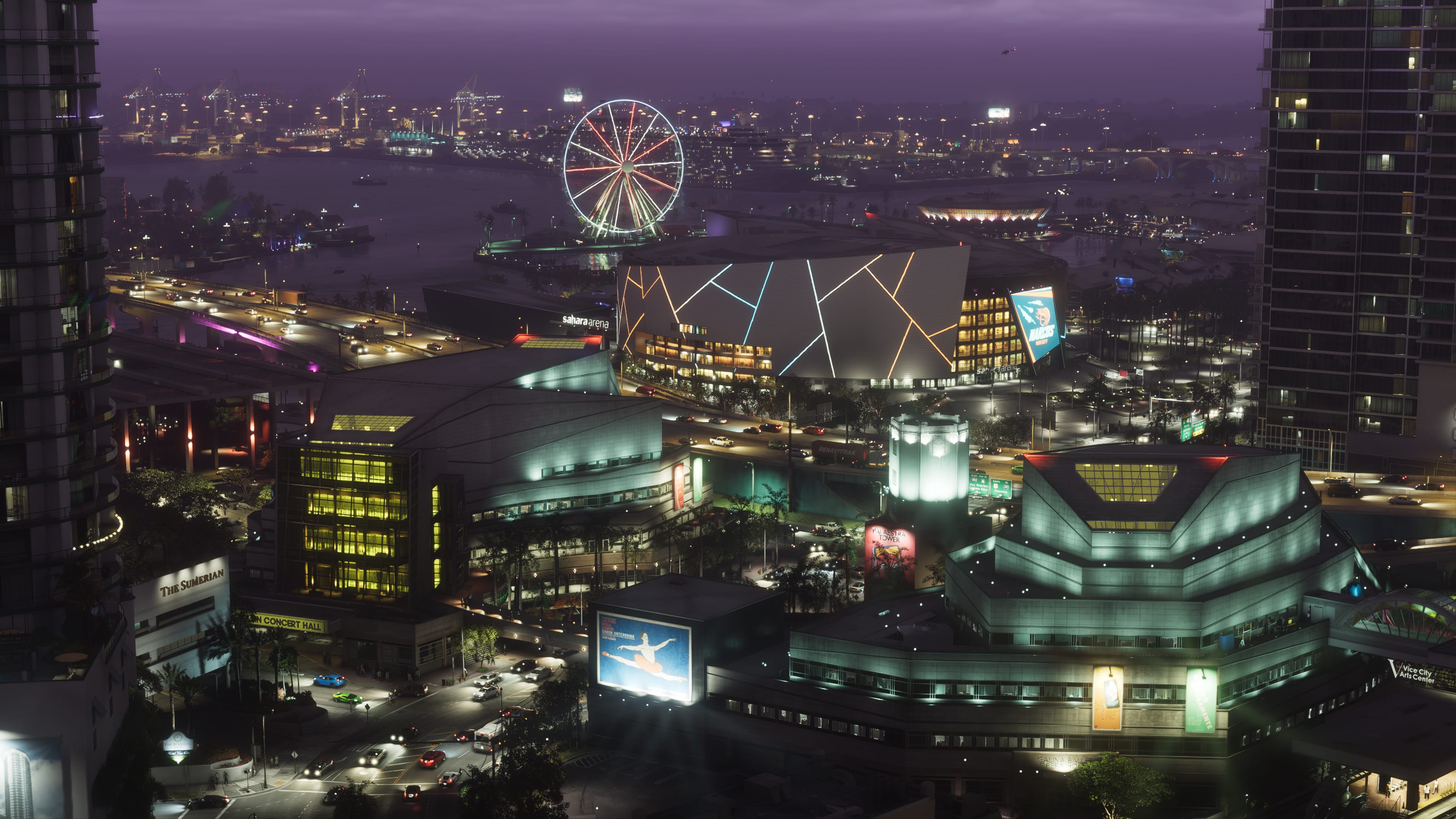
The county calls the three released images conceptual renderings; the airport one shows the Central Garden at night, its palms washed in pink and blue. Every design still needs county approval under its content guidelines. On November 5, USA Today still called the airport, port and cabinet pieces planned, and as of November 7 we have found no verified photos of any in place. Only the sign is up.
From a pitch deck to a package
- June 29: county officials sent Rockstar a pitch deck, according to records The Miamian reported on August 27. Ideas included a “Vice City Airport” arrival experience, wrapped Metromover cars, utility box wraps, custom manhole covers, a PortMiami mural and a car festival at Tropical Park. The mayor’s office said “Nothing has been formally agreed to or approved,” and later told WLRN that Rockstar had approached it.
- September 3: Commissioner Juan Carlos Bermudez and Sheriff Rosie Cordero-Stutz urged the county not to use public resources to promote the game, including any temporary renaming of the airport.
- September 18: at about 1:30 a.m., in an overnight budget meeting, the mayor’s chief of staff, Christopher Hudtwalcker, disclosed the sign deal. Levine Cava signed it under her power to approve contracts under $1 million without a board vote; it came in $25,000 below that line.
- September 22: a helicopter lifted the letters onto the roof. The Miamian reported that the fee covers seven months.
- October 6: Chairman Anthony Rodriguez asked the board to let the mayor negotiate a deal worth more than $1 million. With the item short of votes, Commissioner Oliver Gilbert used a procedural move to delay the vote to October 20. The board voted that any Rockstar deal over $1 million must come back to it, and Levine Cava said such a deal would need board approval.
- October 28: the county announced the $3.9 million package.
The final list is narrower than the pitch: no airport renaming, manhole covers or Tropical Park festival. The utility box idea survived as the cabinet wraps.
The pushback
Bermudez said the county should promote the Miami-Dade it has built, “not a fictional version of our community defined by crime and violence.” Cordero-Stutz called the series “a video game franchise built around criminal activity,” and their joint statement ended: “Miami-Dade County is not Vice City.”
On October 6, Commissioner René Garcia said: “We’re depicting Miami like a murder capital.” According to The Miamian, he added that Rockstar was spending at least $150 million on marketing while the county settled for under $1 million. Commissioner Vicki Lopez said her 16-year-old son had told her: “This is not something government should ever promote.”
Supporters played it down. “We are all adults in this community,” Rodriguez said, adding: “We recognize it’s just a game.” Hudtwalcker called the game “a love letter to Miami.” After the October 28 announcement, WLRN reported that several commissioners objected to the administration going ahead without a full commission vote. The county has not published the value of its own agreement with Rockstar, so it is not clear how the package fits the $1 million rule.
With millions of people around the world waiting for this release, we have an opportunity to make sure Miami-Dade benefits from that attention.
Mayor Daniella Levine Cava, county press release, October 28, 2026
Where the money goes
The county has assigned the $975,000 from the sign to Dan Paul Plaza, the bayfront land behind the county-owned arena, where WLRN says a park has been stalled for more than 30 years. According to Miami Today, voter materials for the 1996 arena deal showed the site as parkland with soccer fields. Instead, the land has mostly served as a staging area for arena events.
In July 2025, a county committee approved plans for a nearly three-acre public space with a playground, a waterfront promenade and a kayak launch, to be paid for with grants and sponsorships because the county had no construction money. The release ties only the sign money to the park.
Three governments, three deals
- Miami-Dade County: this $3.9 million package on county property, from the airport and seaport to the arena roof.
- City of Miami: temporary banners on downtown buildings between October 15 and December 31, at $208,000 for each banner over 5,000 square feet, which could bring the city more than $1 million. The Jason and Lucia banner on the YVE Hotel went up inside that zone.
- City of Miami Beach: a deal approved 4-3 on September 10 for GTA VI branding on beach chairs and umbrellas, which could bring the city about $3 million.
Nothing published links the GTA VI tour buses, which are private sightseeing buses, to any of these deals.
The welcome is new. After Grand Theft Auto: Vice City, set in a 1980s Miami, came out in 2002, Haitian American groups in Florida sued Rockstar, Take-Two, Walmart, Sony and Microsoft over a mission about killing Haitians. The case closed after Rockstar agreed to change the dialogue, WLRN recalled in September.
Editor’s note: As of November 7, the county has not said when the airport and port lighting will switch on, how long the pieces will stay up or which companies sold the ads, and we found no report of a vote on the Rockstar item on October 20. We will update this story when the installations appear.
GTA VI is out November 19 on PS5 and Xbox Series X|S.